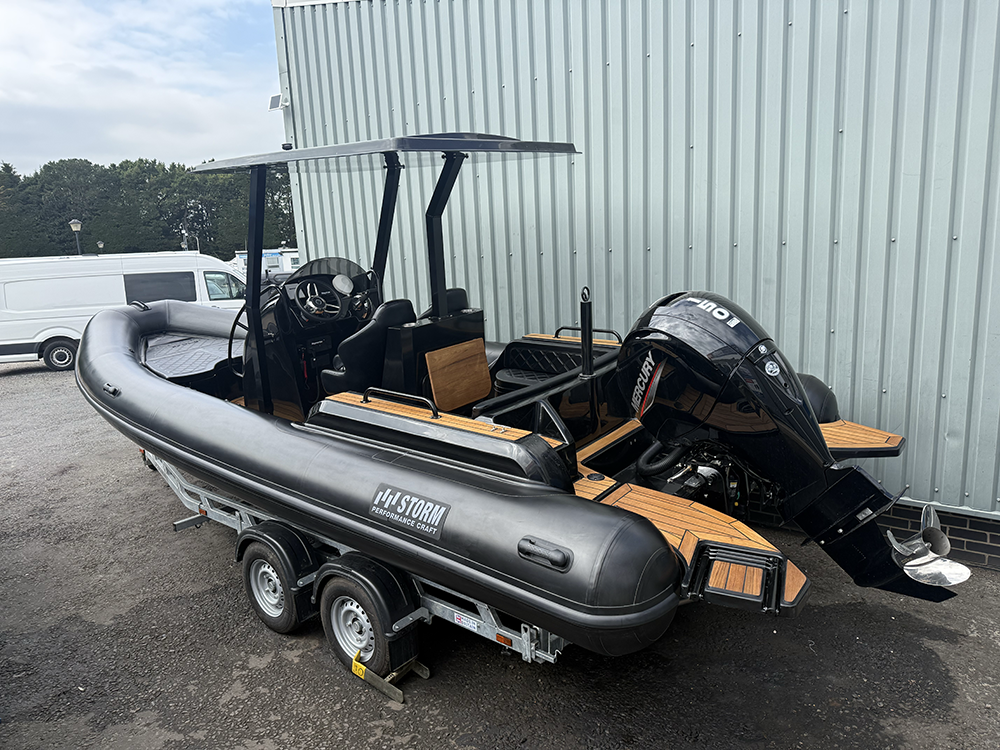

UK RIB Size Guide: Choosing the Right RIB from 3m to 10m
Quick answer: For most UK buyers who want one RIB for family days, coastal exploring and occasional fishing, the practical sweet spot is around 5–6 metres. A 3–4m RIB is easier to store, tow and launch; a 7–8m RIB adds range, payload and offshore comfort; a 10m RIB is a specialist, twin-engine platform. Choose around your typical crew, launch method and operating area—not the biggest boat your budget will stretch to.
Last reviewed: September 2026
RIB size comparison: 3m to 10m
| RIB length | Best suited to | Main advantage | Main compromise | Storm range to explore |
|---|---|---|---|---|
| 3m | Tender work, harbour use, short sheltered trips | Easy storage and low handling weight | Limited space, range and weather protection | Storm/Cloud |
| 4m | Inshore exploring, tender duties, compact family use | Simple launching with useful deck space | Crew and kit soon consume the available room | Storm/Chaser (3.6m Chaser 4) |
| 5m | Family day boating, water sports, inshore fishing | Strong balance of capability and manageability | Less reserve for large crews and long offshore runs | Storm/Chaser or Storm/Strike |
| 6m | Versatile family, fishing, diving and coastal use | More payload and sea-going confidence without becoming unwieldy | Higher tow, storage, engine and running requirements | Chaser 6 (5.6m) or Charge 6 (5.8m) |
| 7m | Longer coastal passages, family comfort, serious leisure use | More seating, storage and offshore capability | Berthing and towing become more consequential | Storm/Charge |
| 8m | Offshore trips, high payloads, premium leisure or tender duties | Space, endurance and weather-protection options | Greater purchase and ownership costs | Storm/Charge |
| 10m | Long-range offshore work and high-performance use | Twin-engine redundancy, payload and passage-making ability | Specialist storage, handling and operating budget | Storm/Charge |
This table is a starting point, not a seaworthiness rating. Hull geometry, load distribution, engine choice, tube condition, seating, weather and skipper experience matter just as much as length.
Storm model names versus actual lengths
A model number is not an exact length. Cloud 5 is 3.6m, Chaser 5 is 4.6m and Strike 5 is 4.8m. Use overall length, beam and the complete loaded package when checking storage, berthing and transport.
| Model | Overall length | Beam | Hull |
|---|---|---|---|
| Cloud 3 | 3.0m | 1.62m | GRP |
| Cloud 4 | 3.3m | 1.85m | GRP |
| Cloud 5 | 3.6m | 1.86m | GRP |
| Chaser 4 | 3.6m | 1.8m | Aluminium |
| Chaser 5 | 4.6m | 2.05m | Aluminium |
| Chaser 6 | 5.6m | 2.35m | Aluminium |
| Strike 5 | 4.8m | 2m | GRP |
| Strike 6 | 5.2m | 2.45m | GRP |
| Charge 6 | 5.8m | 2.5m | GRP |
| Charge 6 Targa | 5.8m | 2.45m | GRP |
| Charge 7 | 6.8m | 2.5m | GRP |
| Charge 7 Targa | 6.8m | 2.5m | GRP |
| Charge 8 Targa | 7.6m | 2.89m | GRP |
| Charge 10 Targa | 10.0m | 3.20m | GRP or Aluminium Options |
Model dimensions checked on 14 October 2026. See the full Storm model comparison for recommended engine power and boat-only prices, then browse RIB boats for sale. A published hull weight is not the complete towing or lifting weight.
What size RIB should you buy?
Start with the day you will do most often. Count the people who will normally be aboard, then add the equipment they genuinely carry: fuel, safety kit, anchor and chain, picnic gear, fishing tackle, dive cylinders or water-sports equipment. Designing around an imagined once-a-year trip can leave you with a boat that is expensive or awkward for the other 95% of your use.
Work through five decisions in order:
- Operating area: sheltered harbour, estuary, coastal water or exposed offshore passage.
- Typical crew: the normal number aboard matters more than the maximum permitted number.
- Launch and storage: marina berth, dry stack, home storage or repeated slipway launching.
- Payload and layout: people and gear need clear, safe space as well as legal capacity.
- Whole-life budget: engine, fuel, trailer, berth, servicing and insurance all scale with the boat.
3m RIBs: compact tenders and sheltered-water boats
A 3m RIB makes sense when compact storage, light handling and easy deployment come first. It can be an excellent yacht tender or a simple platform for short, weather-dependent trips in protected water. It is also a useful entry point for owners who have limited storage space.
The compromise is usable floor area. Two people, fuel and safety equipment can fill a small RIB quickly. Shorter hulls also react more sharply to closely spaced chop, so route choice and weather judgement are central to comfortable use. Explore the compact Storm/Cloud range if ease of ownership is the priority.
4m RIBs: compact, but more genuinely versatile
Moving to around 4m creates noticeably more working room and a broader range of layouts. These boats can suit inshore exploring, harbour work, tender duties and short family outings, while remaining relatively easy to store and launch.
A 4m boat is still highly sensitive to loading. Put heavier crew or equipment in the wrong place and both trim and ride quality suffer. If regular seating and greater protection matter, compare the open-deck models with the console-equipped Storm/Chaser range.
5m RIBs: the versatile family and adventure size
Around 5m is where many buyers find a convincing all-rounder. There is room for a proper helm position, useful storage and flexible seating without automatically committing to a permanent berth or a very large tow vehicle. A well-specified 5m RIB can cover family day boating, inshore fishing, water sports and coastal exploration.
Be disciplined about layout. Extra seats can obstruct movement; an oversized console can consume deck space; and a larger engine adds weight at the stern. Compare the leisure-focused Chaser models with the more purposeful Strike range, including the Storm Strike 5.
6m RIBs: the UK all-round sweet spot
For buyers who want one boat to cover family cruising, fishing, diving and longer coastal days, around 6m is often the most useful compromise. The extra waterline length and displacement can improve comfort and carrying ability, while the boat remains manageable enough for many owners to tow, launch and store with the right vehicle and trailer.
This is also where specification choices have a larger effect on both price and behaviour. Fuel capacity, electronics, seating, engine weight and equipment can differ significantly between two boats of the same length. Compare models by intended use and loaded condition, not length alone. For a shortlist near this size band, compare Chaser 6 (5.6m), Strike 6 (5.2m) and Charge 6 (5.8m). They are not identical six-metre boats; compare the actual dimensions and layouts across the Chaser, Strike and Charge families.
7m RIBs: more comfort for longer days
A 7m-class RIB adds meaningful crew space, storage and protection for longer coastal passages. It can carry a family and their equipment without every movement becoming a negotiation, and it allows more substantial seating, console and fuel arrangements.
The trade-off is logistical. Berth costs, trailer size, launch access, engine power and fuel demand all rise. Before buying, confirm the fully loaded towing mass, the actual trailer dimensions and where the boat will live. The Storm Charge 7 Targa, for example, is 6.8m long and 2.5m in beam, with a Targa top for additional weather protection and equipment carrying.
8m RIBs: offshore range, payload and protection
An 8m-class RIB suits buyers who regularly carry more people or equipment, make longer passages or want additional protection and systems. The extra platform can support larger seating plans, integrated fuel, serious navigation equipment and a more relaxed day aboard.
This is no longer simply a bigger trailer boat. Storage, lifting, berthing and transport need to be planned from the outset. Some wide RIBs may require specialist road-transport arrangements: the standard maximum trailer width in Great Britain is 2.55m, according to GOV.UK towing guidance. The Storm Charge 8 Targa is a 7.6m offshore-oriented example with GRP hull, CSM tubes and Targa-top protection.
10m RIBs: specialist offshore capability
At around 10m, a RIB becomes a substantial offshore platform. Twin-engine installations can provide performance and redundancy, while the longer hull and greater payload support extended passages, equipment and larger crews. This is the right territory for owners whose operating profile genuinely needs it—not simply those who want the largest model.
Plan professionally for berth, lifting, servicing, fuel, insurance and transport before ordering. A sea trial should reproduce realistic loading and the type of water in which the boat will operate. Explore the Storm Charge 10 and compare it with the rest of the Storm/Charge offshore range.
Is a bigger RIB always safer?
No. Greater length can improve ride, payload and reserve, but size does not cancel poor design, overloading, unsuitable conditions or weak seamanship. A smaller boat used conservatively in suitable water can be the safer decision. A larger boat can also impose greater forces, higher speeds and more complex systems.
Check the builder’s capacity plate, design category, maximum load and engine limits for the exact model. Assess those figures alongside your route, forecast, crew competence and escape options.
Trailerability can decide the answer
If you expect to tow regularly, choose the complete boat-and-trailer package rather than looking only at hull length. Verify your vehicle’s towing limit and gross train weight, the trailer’s plated maximum authorised mass, the boat’s loaded weight and the combined width and length. Fuel, batteries, anchor gear and accessories all count.
GOV.UK states that the maximum trailer width for any towing vehicle is 2.55m, and that a vehicle with a maximum authorised mass of 3,500kg or less cannot tow a trailer longer than 7m, excluding the A-frame. Always check the current rules and the plated limits for your own combination.
Choose the range before the upholstery
Once the right size band is clear, choose the hull and layout philosophy that matches the job:
- Storm/Cloud: simple, compact boats for tender and lighter leisure duties.
- Storm/Chaser: accessible family and leisure RIBs with practical console layouts.
- Storm/Strike: capable, purposeful platforms for adventure and expedition use.
- Storm/Charge: premium, high-performance RIBs designed for demanding leisure and offshore use.
You can compare dimensions and prices across all current models on our Storm RIB comparison page. If timing matters, view the small number of physical RIBs currently in stock; catalogue availability does not mean a completed boat is sitting at the marina.
Configure the right RIB
When you have narrowed the choice to a size and range, use the Storm RIB configurator to test tube and hull colours, layout and equipment. A Storm specialist will then check compatibility, availability, final pricing and the delivery schedule with you.
UK RIB size guide FAQs
What is the best size RIB for a family?
For many families, a 5–6m RIB offers the best balance of seating, storage, sea-going ability and manageable ownership. The right answer still depends on crew size, launch method and operating area.
Is a 5m RIB big enough for the sea?
A correctly designed and loaded 5m RIB can be highly capable in suitable coastal conditions. Its safe use depends on design category, equipment, weather, route and skipper experience; length alone is not a guarantee.
What size RIB is easiest to tow?
RIBs around 3–5m are usually easier to store, launch and recover, but you must check the complete loaded trailer mass and dimensions against both the tow vehicle and current UK rules.
Should I buy a 6m or 7m RIB?
Choose 6m if frequent trailering and simple handling are priorities. Choose 7m if longer passages, greater payload and more comfortable seating justify the additional storage, towing and running requirements.
Continue your RIB research
Once you have narrowed the length, compare the best RIB layouts for different uses, check the engine-size and fuel-consumption guide, and build a realistic budget with the complete UK ownership-cost guide. You can then explore the full Storm RIB boats for sale.