
The Rise of Expedition Boating: Why Serious Adventurers Are Choosing RIBs in 2026
There is a shift happening on the UK coastline, and you can see it most weekends if you know where to look. It's not at the marinas full of weekend cruisers idling out for a sundowner. It's at the slipways at five in the morning. It's at the fuel dock in Mallaig, the harbour wall at Tobermory, the pontoon at Lerwick. People are not just going out on their boats any more. They are *going somewhere* on them.
Expedition boating — multi-day, multi-fuel-stop, often single-handed or with one trusted crew — has moved from a niche pursuit of a few hardened skippers into something close to a movement. And the boat of choice for almost all of it is the rigid inflatable.
From day boat to expedition platform
For most of the last twenty years, the RIB occupied a fairly specific cultural slot in the UK: the family day boat. A 6-metre Hypalon-tubed runabout, kept on a trailer or a swing mooring, used for a few hot weekends a year to take the kids tubing or run across to a sheltered bay for lunch. Useful. Fun. But not really the point of a boat for most people who took their boating seriously.
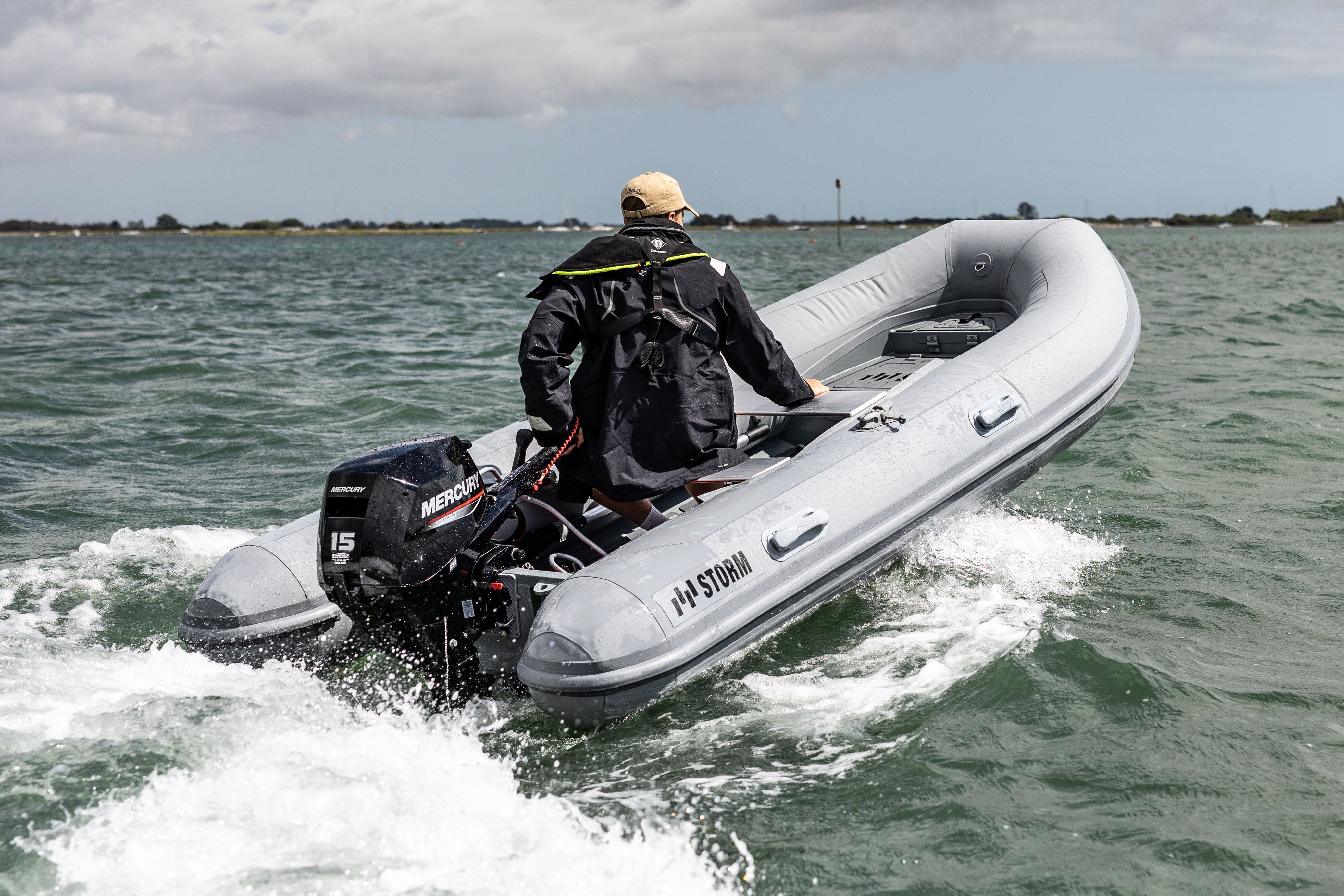
That picture has changed dramatically. In the last two years, RIBs have become the default vehicle for some of the most ambitious coastal expeditions being attempted in British waters. Round-Britain solo circumnavigations. Seven-day, 885 nautical mile passages through Scotland's most remote archipelagos. Hebridean island-hopping itineraries that would have been the preserve of a forty-foot motor yacht a decade ago. And these aren't being done in 12-metre custom builds with a paid skipper. They're being done by individual owners in 7 to 9 metre boats, often launching from a trailer.
The shift is partly technological — outboard reliability and fuel economy have transformed what a small boat can credibly do — but it's mostly philosophical. People want to *use* their boats, not store them.
What's driving the shift
Three forces are pushing this trend forward, and none of them look like they're slowing down.
The experience economy has come for boating. The broader leisure market has shifted decisively from ownership-as-status towards ownership-as-access-to-experiences. People are spending less on the boat itself as a display object and more on what the boat lets them *do*. A RIB capable of getting you to France and back delivers more genuine experience per pound than a flybridge cruiser that lives on a marina berth eleven months of the year. Buyers know it.
Coastal Britain has been rediscovered. The post-pandemic appetite for domestic adventure didn't fade — it deepened. Wild swimming, sea kayaking, coasteering, and bothy walking have all exploded, and they share a common protagonist: the person who wants the British coastline up close, on its own terms, away from the crowd. A RIB is the natural extension of that worldview. It's the only powered vessel that can do five hours of open-sea passage in the morning and then nose into a hidden cove with two feet of draft in the afternoon.
The technology has finally caught up. Modern four-stroke outboards in the 200-400 hp range will run for hundreds of hours with minimal maintenance, sip fuel by historical standards, and deliver power-to-weight ratios that were science fiction in 2010. Combine that with chartplotter integration, AIS, satellite communicators, and lithium house banks, and a 7-metre RIB is now a genuinely capable offshore platform. Not a compromise. A capability.
Why the RIB, specifically?
There are other boat types you *could* attempt this kind of boating in. A small sportsfisher. An aluminium centre-console. A trailerable cuddy. People do all of them, and they work — within limits. But the RIB has won this category for reasons that are baked into the hull form, not the marketing.
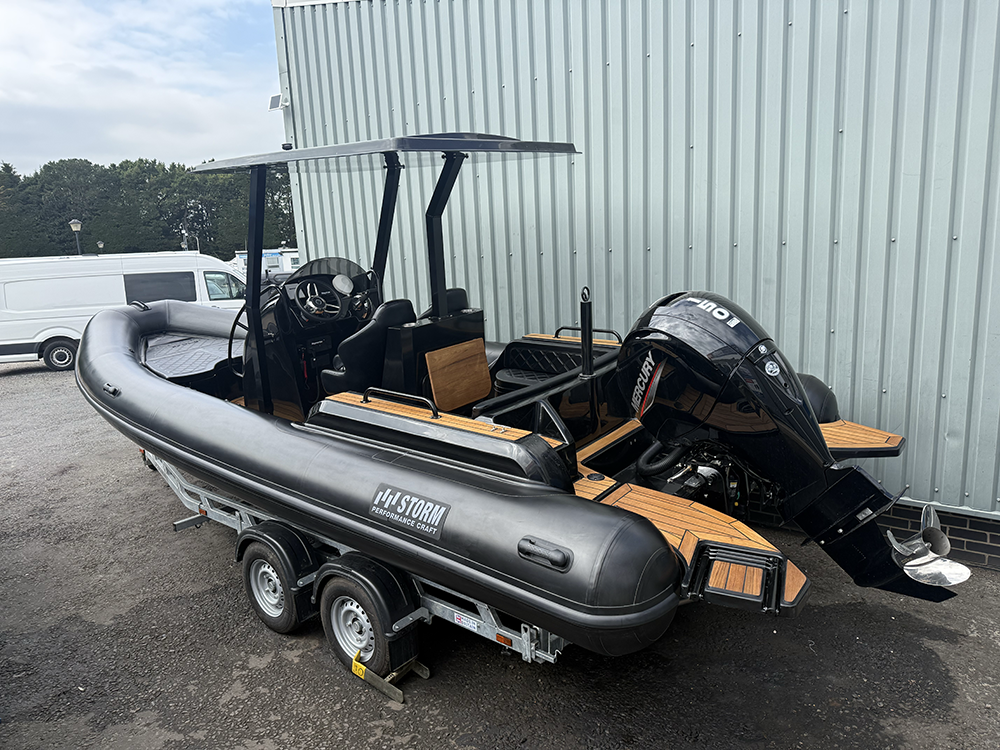
A deep-V GRP hull with substantial inflatable tubes does three things no other small-boat configuration does as well. It absorbs sea state — the tubes act as a shock absorber the way no rigid sponson can. It self-rights its own buoyancy in a way that flat-bottomed alternatives cannot match in heavy weather. And it lets you go alongside a rock, a beach, or another boat without anxiety, because the first thing that touches anything else is inflatable.
For expedition use, those three properties compound. You can run harder for longer because the boat is taking the punishment, not your spine. You can push into more marginal conditions because the boat has a wider safe envelope. And you can land where there is no harbour, which is most of the actual British coastline.
The materials question matters more than ever
This is where the expedition trend has separated the serious builders from the volume manufacturers. If you're using a RIB for occasional family weekends, almost any tube material will see you through ten years. If you're using one for cross-channel passages, Scottish island runs, or any kind of sustained UV and saltwater exposure, the choice of tube fabric becomes the single most consequential decision in the build.
Hypalon (more accurately, CSM — chlorosulfonated polyethylene) remains the only material that genuinely survives expedition use without degradation. It resists UV, ozone, chemicals, and abrasion in a way that PVC simply cannot match. PVC tubes can be excellent for two or three seasons in temperate use. They are not what you want underneath you on day six of a Hebridean passage.
The premium tier of the UK RIB market — the builders who supply lifeboat institutions, military users, and serious private owners — has effectively standardised on Hypalon for this reason. It costs more. It lasts decades. For the buyer who plans to actually use the boat, the maths is not close.
What this means if you're buying now
If you're in the market for a serious RIB in 2026, the questions to ask have changed. It used to be enough to specify length, engine size, and seat configuration. Now the meaningful questions look more like:
- What's the tube material, and what is the manufacturer's expected service life under heavy use?
- What's the hull's deep-V deadrise at the transom, and how does it perform in a 1.5 metre short sea?
- What's the fuel capacity for genuine range, not coastal pottering?
- What provision is there for dry stowage, charging, and a sensible nav station?
- Can the boat be repaired anywhere, or does it depend on proprietary parts and a specific yard?
The boats that answer those questions well are the ones being chosen by the people pushing this category forward. They tend to be built in Britain. They tend to be built in low volumes. They tend to be built by people who use boats themselves.
That's not a coincidence. Expedition boating rewards builders who think like users, and punishes builders who think like marketers.
The next five years
The expedition RIB segment is going to keep growing, and the centre of gravity will keep moving towards lighter, longer-range, more self-sufficient boats in the 7-9 metre range. Electric propulsion will arrive in this segment eventually, but not soon — the energy density required for genuine offshore range is still years away. Hybrid setups for harbour and silent running are more plausible in the medium term.
What won't change is the underlying logic. The British coastline is one of the most varied and rewarding cruising grounds on earth, most of it is empty most of the time, and the boat that lets you actually reach the interesting parts of it is the RIB.
If you're thinking about what your boating life looks like for the rest of this decade, that's worth sitting with.
Storm RIBs builds rigid inflatable boats in Britain for owners who plan to use them. Hypalon-only tube construction, deep-V hulls built without compromise, and a design philosophy shaped by people who spend time on the water.
See our expedition RIB range or browse the full RIB and SIB lineup to find the boat for your next passage.